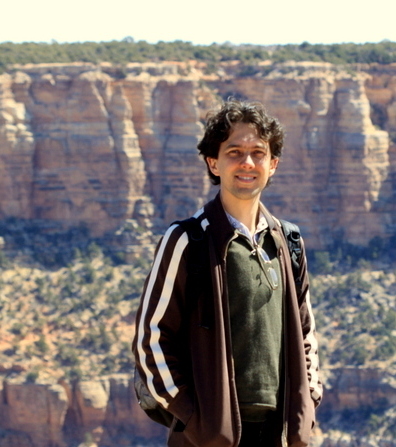
As an undergraduate I fell in love with science. Studying the behavioral ecology of social insects helped me learn about how mini brains, individually or collectively, have fascinating emerging properties to solve problems, such as how to navigate complex environments without a GPS or a map! Reading and learning from giants such as E. O. Wilson and Carl Sagan, and great mentors such as Paulo Oliveira, Diana Wheeler, Kirk Anderson, Fernando Consoli, and Bill Snyder, I expanded my scientific pursue, integrating multiple disciplines that ranged from how microbial symbiosis benefits insects, to how we can leverage molecular tools to help resolve challenges with insect pests and food safety.
Today, I am an ecologist broadly interested in how properties of biological systems emerge, whether in the micro scale (e.g. microbial symbiosis and animal niche specializations) or in macro habitats (e.g. how farm management interacts with insect communities and their ecosystem services). More specifically, my research questions are centered on the ecology and evolution of multi-trophic interactions, including microbes, insects and plants. For instance, I have been using molecular diet profiling to uncover the movement ecology of different herbivorous insects, including seasonal movement of insect pests (e.g. the whitefly Bemisia tabaci, and the recently introduced two-spotted cotton leafhopper Amrasca biguttula), as well as profiling microbial symbionts in fly pollinators (Syrphidae) to help uncover recent events of long-distance migration.
You can see a complete list of current and past projects “here”.
My research approach includes a transdisciplinary approach, including the use of molecular biology tools (e.g. plant (ITS), bacteria (16S) and animal (COI/ND2) metabarcoding, PCR/qPCR for pathogen detection), bioinformatics, behavioral experiments, and morphology (optical and electron microscopy).
 Pedro Rodrigues [social insects, microbes, behavior and nutrition]